
Invited Speaker
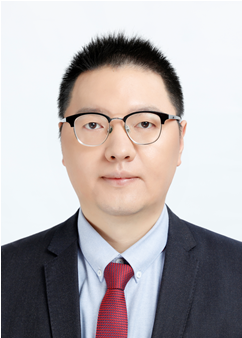
Dan Zhang
Professor, School of Information Engineering, Zhejiang University of Technology, ChinaSpeech Title: Deep Learning-Based Fault Diagnosis for Rotating Machinery
Abstract: Rotating machinery serves as the core component of China's "national heavy equipment," underpinning energy, transportation, manufacturing, and defense. Sudden failures can cause catastrophic economic losses and safety accidents, making early fault diagnosis of urgent theoretical and practical value. With the rapid advancement of artificial intelligence, deep learning-based fault diagnosis has attracted increasing attention. This report focuses on fault diagnosis under domain adaptation, partial domain adaptation, and domain generalization scenarios. It reviews the challenges posed by domain shift between training and testing data, including distribution discrepancy, label space mismatch, and unseen target domains. Finally, future research directions toward robust and generalizable intelligent diagnosis for rotating machinery are discussed.
Biography: Professor, PhD Supervisor, Associate Dean of Academic Affairs at Jianxing Honors College, and recipient of the Excellent Young Scientists Fund of National Natural Science Foundation of China (NSFC) . He has long been dedicated to research in autonomous navigation and localization of mobile robots, cluster control of unmanned vehicles/drones, and AI-driven intelligent operation and maintenance of electromechanical equipment. As the principal investigator, he has led 13 projects, including 5 NSFC projects (Joint Key Program, Excellent Young Scientists Fund, General Program, Young Scientists fund, and Key International Cooperation Subproject), Subprojects of the National Key Research and Development Program, Zhejiang Provincial Pioneering Troops Program. He has published two monographs with Springer and authored over 100 papers in IEEE journals, including Automatica and IEEE TAC, and received over 10000 citations. Among these, 26 papers have been selected as ESI highly cited papers, and 7 have been recognized as ESI hot papers. He has received numerous awards, including the Second Prize of Natural Science from the Chinese Association of Automation, the Second Prize of Science and Technology Progress from the Chinese Association of Automation, the Outstanding Young Scholar Award from the Chinese Association for Artificial Intelligence, and the Best Paper Award at the IEEE ICCAR International Conference. He has also been honored with titles such as Zhejiang Provincial Qianjiang Talent, Hong Kong Scholar, Zhejiang Provincial Leading Talent in Higher Education Institutions, Clarivate Analytics Highly Cited Researcher, and Elsevier China Highly Cited Scholar.